



Leadership Education in Neurodevelopmental and Related Disabilities (LEND)
Browse this collection of leadership project posters presented by past LEND cohort trainees.
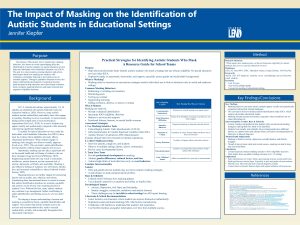
The purpose of this project was to examine how masking behaviors, also known as social camouflaging affect the identification of autistic students for special education services under the Individuals with Disabilities Education Act (IDEA). The goal is to raise awareness among educators and school-based teams about how masking can interfere with evaluations, potentially delaying or preventing access to essential supports. Through a qualitative literature review, this project informed the development of a practical resource guide designed to help educators and school-based evaluation teams recognize masking behaviors and make informed and supportive eligibility decisions.
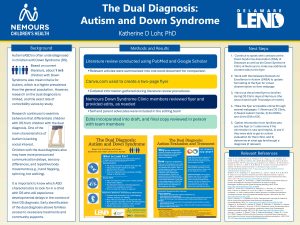
Autism (ASD) is often underdiagnosed in children with Down Syndrome (DS). Based on current literature, about 1 in 5 children with Down Syndrome also meet criteria for Autism, which is a higher prevalence than the general population. However, research on the dual diagnosis is limited, and the exact rate of comorbidity varies by study. Research continues to examine behaviors that differentiate children with DS from children with the dual diagnosis. One of the main characteristics of Autism is lacking social interest. Children with the dual diagnosis also may have more pronounced communication delays, sensory differences, and repetitive body movements (e.g., hand flapping, spinning, toe walking).
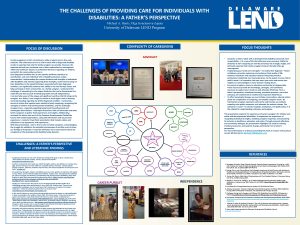
Family caregiving is a 24/7 commitment, unlike a typical nine-to-five work schedule. This continuous care for a child or adult with a diagnosed disability results in expertise that only the family caregiver can provide. However, the expertise derived from continued care is often undervalued or unrecognized within the healthcare system, in professional decisions regarding our children, and within the communities we live in.
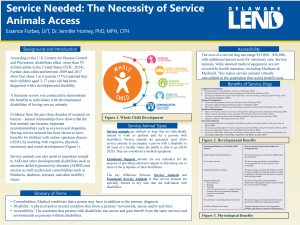
According to the U.S. Centers for Disease Control and Prevention, disabilities affect more than 70 million adults in the United States (CDC, 2024). Further, data collected between 2009 and 2017 show that about 1 in 6 parents (17%) reported that their children aged 3-17 years old had been diagnosed with a developmental disability.
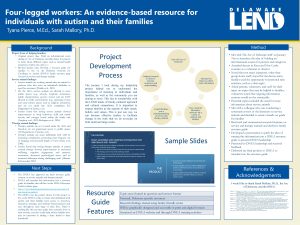
Service animals are working animals that are trained to perform tasks that assist an individual’s disability or need for assistance (Winkle et al., 2011). Studies found that having service animals showed improvements in sleep behaviors, child and family moods, and stronger bonds within the family unit (Leighton et al., 2023; Rodriguez et al., 2024).